Description
Rolling Anti-Lag Boost for EvoX using Cruise Control Button Patch — for Stock ECI Mitsubishi Lancer Evolution X
Here you can buy a patch that gives your stock ECU Mitsubishi Lancer EvoX a Rolling Anti-Lag feature that eliminates turbo lag during rolling start racing. It holds your engine at a specific RPM and artificially forces air and fuel into the exhaust to spool the turbo. When released, your car unleashes instant, maximum boost without waiting for the turbo to build pressure.
Does it support non-TephraXModV3 ROMs too? No, due to VIN lock.
Does it support Mitsubishi Lancer Ralliart as well? Yes, all Tephra V3s.
Please allow one week for delivery after you email us your current rom.
How It Works
When you are on the gas and rolling, and you press the rolling anti-lag button (mapped to the cruise control button), the car’s stock ECU computer alters the ignition timing and dumps extra fuel into the exhaust. Instead of burning inside the engine, this mixture combusts violently inside the exhaust manifold. The resulting shockwave and heat keep the turbocharger spinning at high speeds — even though you are sitting at a held RPM, not climbing the rev range.
The Key Benefits
- Instant Power. The moment you release the anti-lag button and step on the gas, full boost is already primed. There is zero delay (lag).
- Roll Racing Dominance. It gives you a massive advantage in rolling races (starting at 40 km/h or 60 km/h) by ensuring your engine is operating at its peak powerband right from the jump.
- Aggressive Sound. It produces a signature barrage of loud pops, bangs, and exhaust flames.
- Predictable Engagement. Because every gate is checked every cycle, the system never engages by accident and never leaves itself armed when it shouldn’t be. It is genuinely usable as a feature, not a stunt mode.
- Accidental Flash Protected. The patch includes an integrity check that runs every cycle. If a dealer reflash or partial overwrite ever damages the patch, it silently disables itself rather than producing unpredictable behaviour.
Unlimited Boost at the Press of a Button
At first I thought rolling anti-lag would be more like spark cut or two-step at launch where 18 PSI is the upper amount of boost possible, but since the engine is spinning at a higher engine load than stationary, it turns out that you can get full boost anywhere between 28 to 40 PSI at 3,500 rpm if you want, at the press of a button.
How It Activates
The patch is conservative about when it will fire. All four conditions have to be true at the same time, on every cycle, or it disengages and silently hands control back to the stock map:
- CANCEL button held. The CAN frame from your steering-wheel cancel button is the arming input. The system polls for it twice per cycle — once to confirm the frame is being received at all, once to confirm the button is currently pressed (rather than just released). Both have to be true.
- Engine speed at or above 3,000 rpm. Below 3,000 the turbo isn’t making meaningful boost yet, so anti-lag has nothing to preserve. The patch enforces this as a hard floor — drop below 3,000 and it disengages instantly.
- Throttle at 60% or more. This is the critical one. You have to be on the gas for the system to arm. Cruising at part-throttle won’t trigger it. The intended use is to flatten the pedal first and then press CANCEL — the patch only kicks in after you’ve committed to making power.
- Vehicle speed below 160 kph. A safety ceiling. Above 160 kph the system disengages by design. This is what makes it rolling anti-lag rather than a stationary two-step — you can use it at any reasonable road or track speed up to that ceiling, not just at a standstill.
Lose any one of those four conditions for a single cycle (a fraction of a second) and the patch quietly switches off and reverts to the stock calibration. It re-arms instantly the next time all four conditions come back into range, which is why it works cleanly across upshifts — the brief throttle lift during a shift disengages it, and the moment you’re back on the gas it re-engages.
How the Rev Window Works (The “Two-Step-Like” Behaviour)
This is the part of the patch that gives the system its character. When you arm it, the ECU latches the engine speed at that moment as an internal baseline. It then computes a ceiling 5% above that baseline — so if you press CANCEL at 5,000 rpm, the ceiling is 5,250 rpm. From that moment on, every cycle through the ECU’s periodic task does the following:
- If engine speed climbs above the 5% ceiling, the patch fires a spark cut, which kills the next ignition event and holds the rpm where it is.
- If engine speed stays within the window, normal ignition continues but on the retarded alt-timing map, with the additional retard overlay layered on top.
The practical effect is that the engine sits on the held rpm for as long as you keep the conditions true. It can’t run away from you the way it would on a stock map at full throttle, because the spark cut is acting as a moving rev limit pinned to wherever you armed it. This is the same mechanism a stationary two-step uses — the only difference is that a two-step pins itself at a single fixed rpm at standstill, while this patch pins itself wherever you happened to be when you pressed the button.
The fuel-rich, retarded mixture combined with the spark cut creates the textbook rolling-anti-lag behaviour: violent combustion in the exhaust, pops and bangs out of the tailpipe, flames, and most importantly a turbine wheel that stays loaded at high speed even though the engine isn’t accelerating.
How the Timing Tables Work
The patch ships with two calibration tables baked in:
- Table A — the alternate ignition map. A 21-row by 16-column lookup indexed by load and rpm. While the system is armed, the ECU’s ignition lookup is redirected to this table instead of the stock one. The shape of the map is consistent with a tuned, MBT-tracking surface that’s more aggressive at mid-load mid-rpm than the factory map.
- Table B — the signed retard overlay. A 20-row by 26-column lookup of signed byte values that get applied on top of Table A’s output. Most of the cells sit at −20° (the “aggressiveness” setting), with a positive correction band that softens the retard in specific transient zones. The signed byte encoding means each cell can either pull timing out or push a small amount back in, depending on the (load, rpm) point.
The combination matters. Table A on its own would produce a hotter but still drivable map. Table B on its own would be unusable. The two together produce a calibration that runs aggressive baseline timing everywhere except in the cells where the patch deliberately yanks twenty degrees of retard out — which is what dumps the unburnt charge into the exhaust where you want it.
Activation Conditions — At a Glance
| Condition | Threshold |
|---|---|
| Trigger button | CANCEL held (CAN frame) |
| Engine speed | ≥ 3,000 rpm |
| Throttle | ≥ 60% |
| Vehicle speed | < 160 kph |
| Rev window | held within 5% of activation rpm |
| Retard depth | up to −20° (Table B peak) |
Important: Send the exact stable V3 ROM file currently working on your car.
Free 14-day support for any discrepancies with the ROM patch — they do occasionally happen, so please test within 14 days.
No Cruise Control Switch?
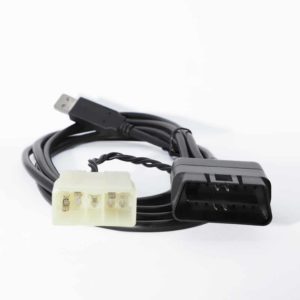
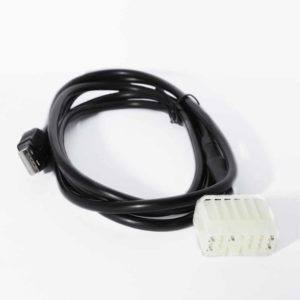
If you have no EvoX cruise control switch in your Ralliart or EvoX, you can buy the cruise control switch from Mitsubishi Dealer in your local country – they are still in stock from Japan. Enable the cruise control with MMCcodingwriter (included inside the evoscan.zip) using an OP2 cable, and/or you can buy from a dealer (part number ######).
TephraXModV3 ROM sold separately.
Order Form — Please Provide
1. ROM ID:
5958 / 5631 / 5305 / Other: ____
2. Car Details:
Model: GSR / MR
Year: ____
Transmission: Manual / SST
3. Stable ROM:
Is this ROM currently working properly on the car?
Yes / No
4. Trigger Button:
RES / SET / CANCEL
5. Minimum RPM:
3,000 / 3,500 / 4,000 / Other: ____ rpm
6. Start TPS:
60% / 70% / 80% / Other: ____ %
7. Max Speed:
120 km/h / 75 mph
140 km/h / 90 mph
160 km/h / 100 mph
Other: ____
8. Aggressiveness:
Stage 1: −5°
Stage 2: −10°
Stage 3: −15°
Stage 4: −20°
9. Spark Cut:
Yes / No
Things to Keep in Mind
Anti-lag is incredibly harsh on hardware, and rolling anti-lag in particular asks the turbocharger to operate at exhaust gas temperatures that are well above what the factory calibration ever produces. The extreme heat and the explosive pressure waves in the exhaust place massive sustained stress on the turbine wheel, the turbine housing, the exhaust manifold studs, the catalytic converter (if fitted), and the head gasket around the exhaust ports. The clutch packs on the SST gearbox also see elevated temperatures during sustained activation.
For this reason, this patch is intended for track and race use on cars that get regular maintenance — exhaust components inspected after every event, turbocharger condition monitored, ignition components checked frequently. It is not designed to be left armed on a daily-driven street car for casual use. Run it where it earns its keep — at the line, between corners, in the moments where the difference between full boost and half boost is the difference between winning and not — and your hardware will thank you.